


A semantic layer is a business focused layer that organizes data, definitions and calculations so they are easier to use in reporting and analysis.
Semantic layer
A semantic layer is a structured business layer that makes data easier to understand, use and analyze in reports.
Quick facts about semantic layers

Gives data meaning
A semantic layer helps translate raw data into business friendly fields, measures and definitions.

Supports consistency
It helps teams use the same logic for metrics such as revenue, margin, retention or customer count.

Connects users to data
A semantic layer makes it easier for report creators and users to work with data without needing to understand every source table.

Relevant to Power BI
In Power BI, semantic models can act as the semantic layer that supports reports, visuals and measures.
Trusted reports need shared definitions
A semantic layer helps bridge the gap between technical data structures and the way people talk about the business. Instead of working directly with source tables, users can work with clearer names, relationships and calculations.
A semantic layer can include:
- Business friendly field names
- Relationships between tables
- Measures and calculations
- Security and access rules
This makes reporting easier to scale. When teams use shared definitions, reports become easier to build, compare and trust across departments, customers or reporting use cases.
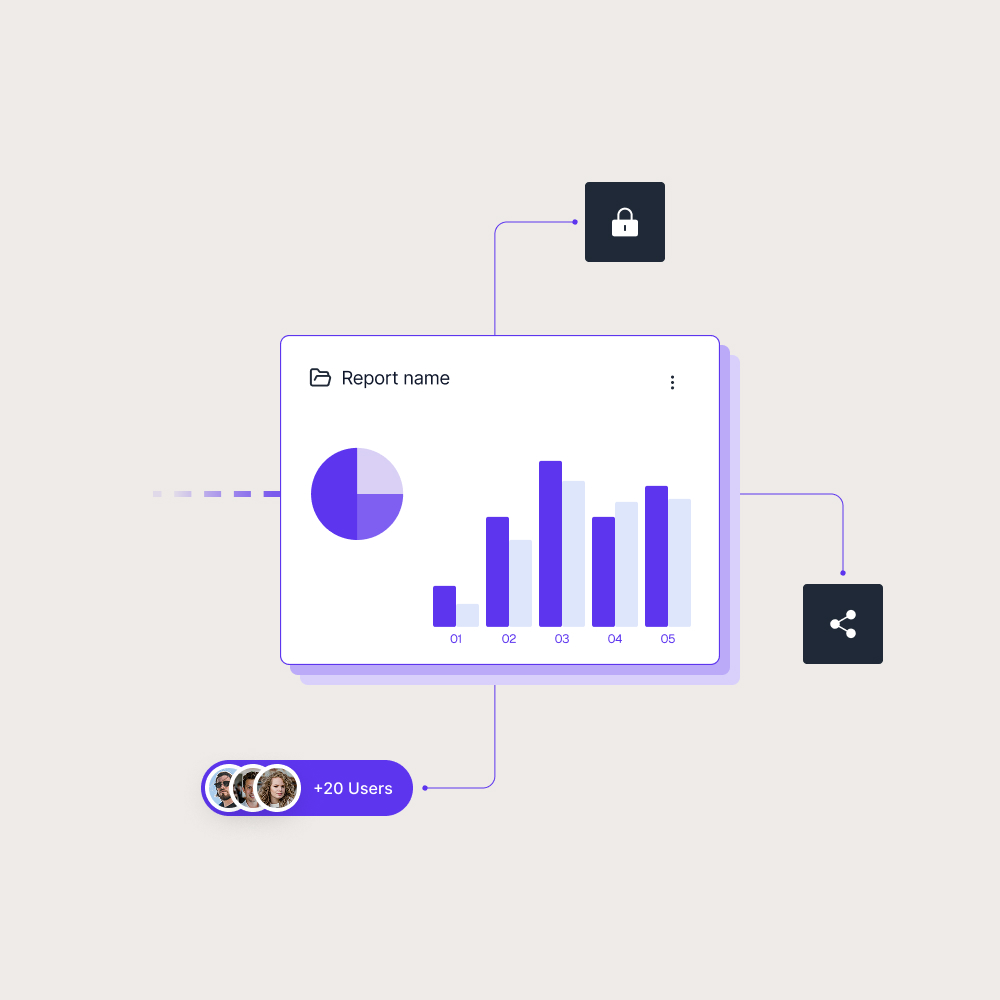
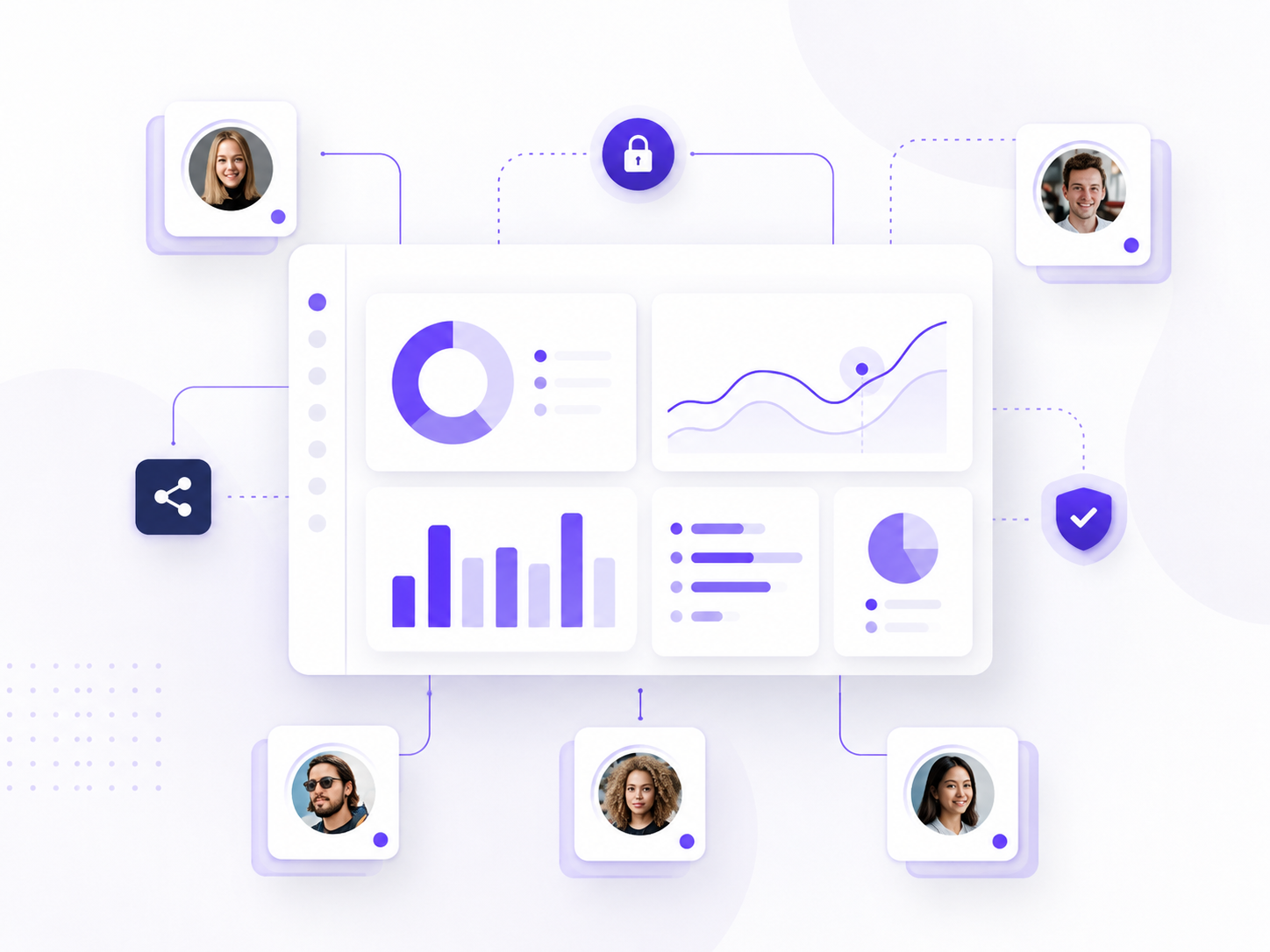
Trusted reports need shared definitions
A semantic layer matters because reports often fail when teams define the same metric in different ways. If one report calculates revenue differently from another, users may spend more time questioning the numbers than using the insight.
In Power BI, a semantic model can provide the structure behind consistent reports. Skald BI helps with the next step: sharing finished Power BI reports through a secure branded portal, so customers, partners and internal users can access reporting built on clearer definitions and controlled delivery.
Use cases
See how different types of organisations use Skald BI to share Power BI securely with employees, customers and partners.
Contact us
Try Skald BI for free
Whether you’re looking for expert advice, tailored
solutions, or have a specific inquiry, reach out to
our team.
No set up. Live fast.
Support contact
Follow us
Frequently asked questions
What is a semantic layer used for?
It is used to give raw data business meaning, define shared metrics and make reporting more consistent across teams and tools.
Is a semantic layer the same as a semantic model?
They are closely related. In Power BI, a semantic model can act as the semantic layer behind reports.
Why is a semantic layer important in Power BI?
It helps report creators use consistent data relationships, measures and business logic across reports.
How does a semantic layer relate to Skald BI?